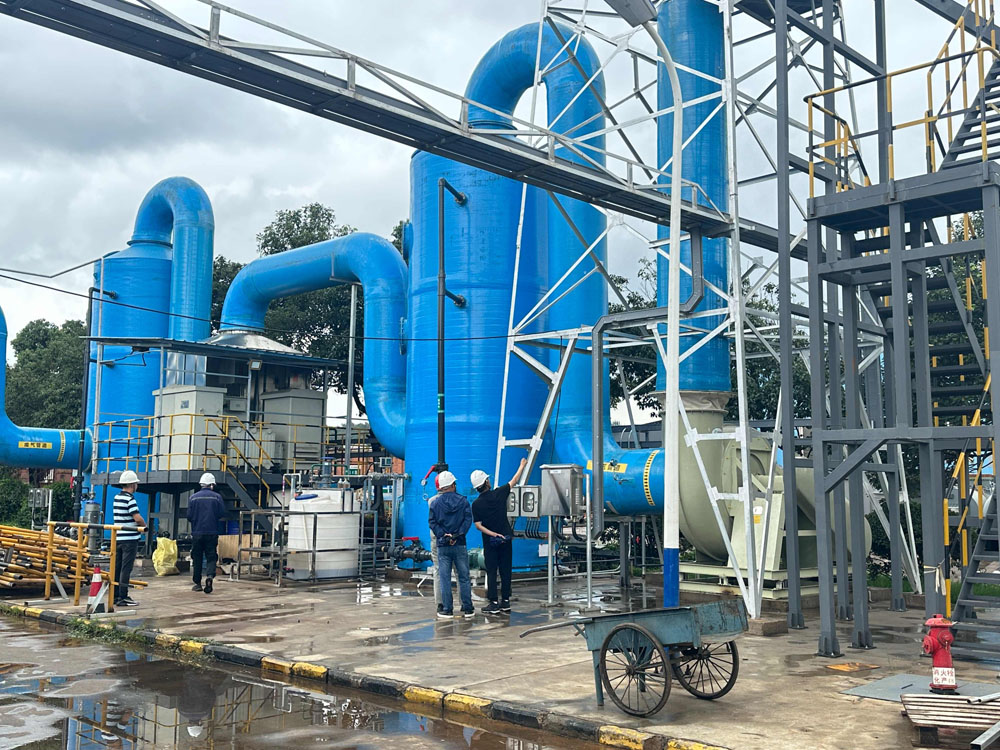
Different from ordinary civil telephones, industrial telephones are mainly used in harsh industrial scenarios such as mines, oil fields, factory workshops, rail transit, power stations, ports and docks. These scenarios generally suffer from problems such as limited network bandwidth, unstable transmission links, high environmental noise, and multi-terminal concurrent calls. In industrial voice communication systems, the transmission efficiency of voice data directly affects call fluency, system concurrent capacity, and overall networking cost. Voice compression algorithms are the core technical link that balances voice quality, transmission bandwidth, and system stability.
Bandwidth efficiency, simply put, is the amount of valid voice data that can be transmitted per unit of bandwidth, and is a key indicator for measuring the performance of industrial voice communication systems. Uncompressed original voice signals occupy extremely high bandwidth. In narrowband private networks, wireless industrial networks, or long-distance transmission scenarios, problems such as bandwidth congestion, packet loss, delay, and call freezes are prone to occur, which cannot meet the 7×24 uninterrupted and highly reliable call requirements of industrial scenarios. Through dedicated voice compression algorithms adapted to industrial scenarios, the transmission bit rate of voice data is greatly reduced and bandwidth utilization is improved while ensuring the clarity of industrial instructions and emergency calls. This not only optimizes the utilization of existing network resources and reduces networking and operation costs, but also guarantees system stability during multi-terminal concurrent calls, adapting to various complex industrial network environments.
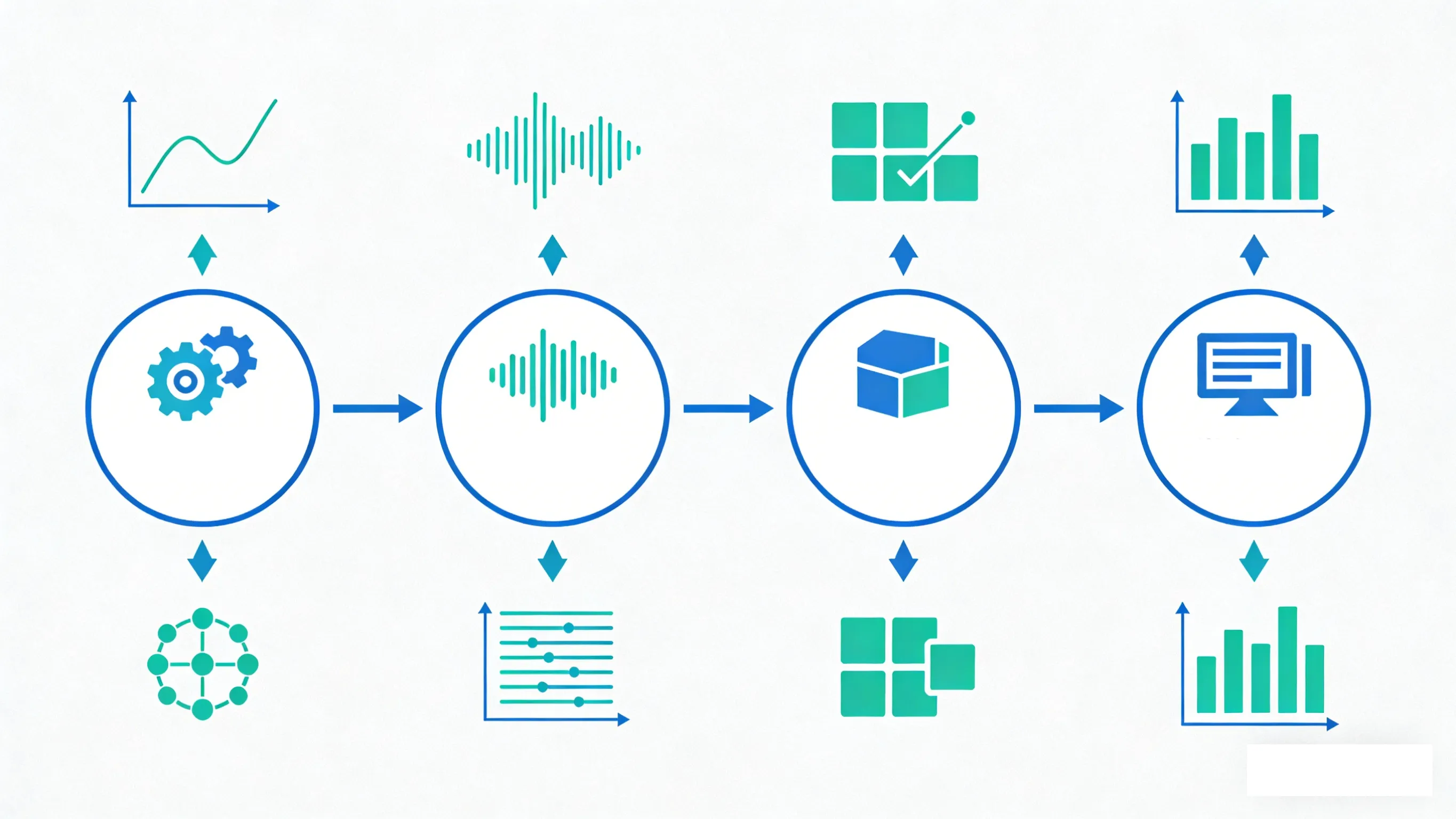
For the construction, equipment selection, and later operation and maintenance of industrial communication systems, an in-depth understanding of the technical principles, performance differences, and bandwidth optimization logic of different voice compression algorithms is the core prerequisite for formulating efficient and reliable industrial voice communication solutions. This article focuses on industrial telephone scenarios, comprehensively analyzes the technical details of mainstream voice compression algorithms, compares the bandwidth efficiency, voice quality, and hardware adaptability of different algorithms, and provides a complete bandwidth efficiency optimization engineering plan and selection suggestions for engineers, purchasers, and technical operation and maintenance personnel in the industrial communication field.
Core Principles of Voice Compression Algorithms and Industrial Scenario Adaptation Logic
Core Technical Logic of Voice Compression
The core goal of voice compression algorithms is to remove redundant data from voice signals and reduce the data transmission bit rate while retaining valid voice information as much as possible (especially key voice information such as instructions, alarms, and emergency calls in industrial scenarios), thereby reducing bandwidth occupation. Voice signals themselves contain a large amount of time-domain and frequency-domain redundancy, such as high-frequency noise imperceptible to the human ear, silent segment redundancy, and repeated waveforms. Compression algorithms eliminate or compactly encode these redundant data through coding technologies to achieve data volume compression, and the receiving end then restores the voice signal through corresponding decoding algorithms.
The requirements of industrial scenarios for voice compression algorithms are significantly different from those of civil scenarios: civil scenarios focus more on voice naturalness and comfort, while industrial scenarios prioritize voice intelligibility, transmission stability, low delay, and anti-interference ability. At the same time, the algorithms are required to adapt to the hardware computing power of industrial telephones (industrial terminals generally have lower computing power than civil smart devices), and be compatible with narrowband transmission, multi-concurrency, long-distance transmission and other scenarios. Some explosion-proof and dust-proof industrial terminals also require low-power operation of the algorithms.
Core Classification of Voice Compression Algorithms
According to technical implementation paths, voice compression algorithms commonly used in industrial telephones are mainly divided into three categories. Each type of algorithm has obvious differences in compression efficiency, voice quality, and bandwidth occupation, adapting to the needs of different industrial scenarios:
- Waveform Coding Algorithms: Directly sample, quantize and encode voice waveforms. They are mature in technology, extremely low in delay, low in decoding complexity, and can retain the original voice waveform to the greatest extent. However, they have low compression ratio and high bandwidth occupation, suitable for industrial scenarios with extremely high requirements for voice fidelity and sufficient bandwidth resources;
- Parametric Coding Algorithms: Encode and transmit by extracting characteristic parameters of voice signals (such as fundamental frequency, formant, vocal tract parameters, etc.). The receiving end reconstructs the voice signal according to the parameters. They have extremely high compression ratio and minimal bandwidth occupation, but the voice naturalness is low and the intelligibility meets the basic industrial call requirements, suitable for narrowband, long-distance, and extremely bandwidth-constrained industrial scenarios;
- Hybrid Coding Algorithms: Combining the advantages of waveform coding and parametric coding, balancing voice quality and compression ratio, with moderate bandwidth occupation and controllable delay. They are the most widely used algorithm type in industrial telephones at present, balancing bandwidth efficiency and call reliability, adapting to most industrial scenarios.
In-depth Analysis of Mainstream Voice Compression Algorithms for Industrial Telephones
G.711 (Waveform Coding, Basic Uncompressed Standard)
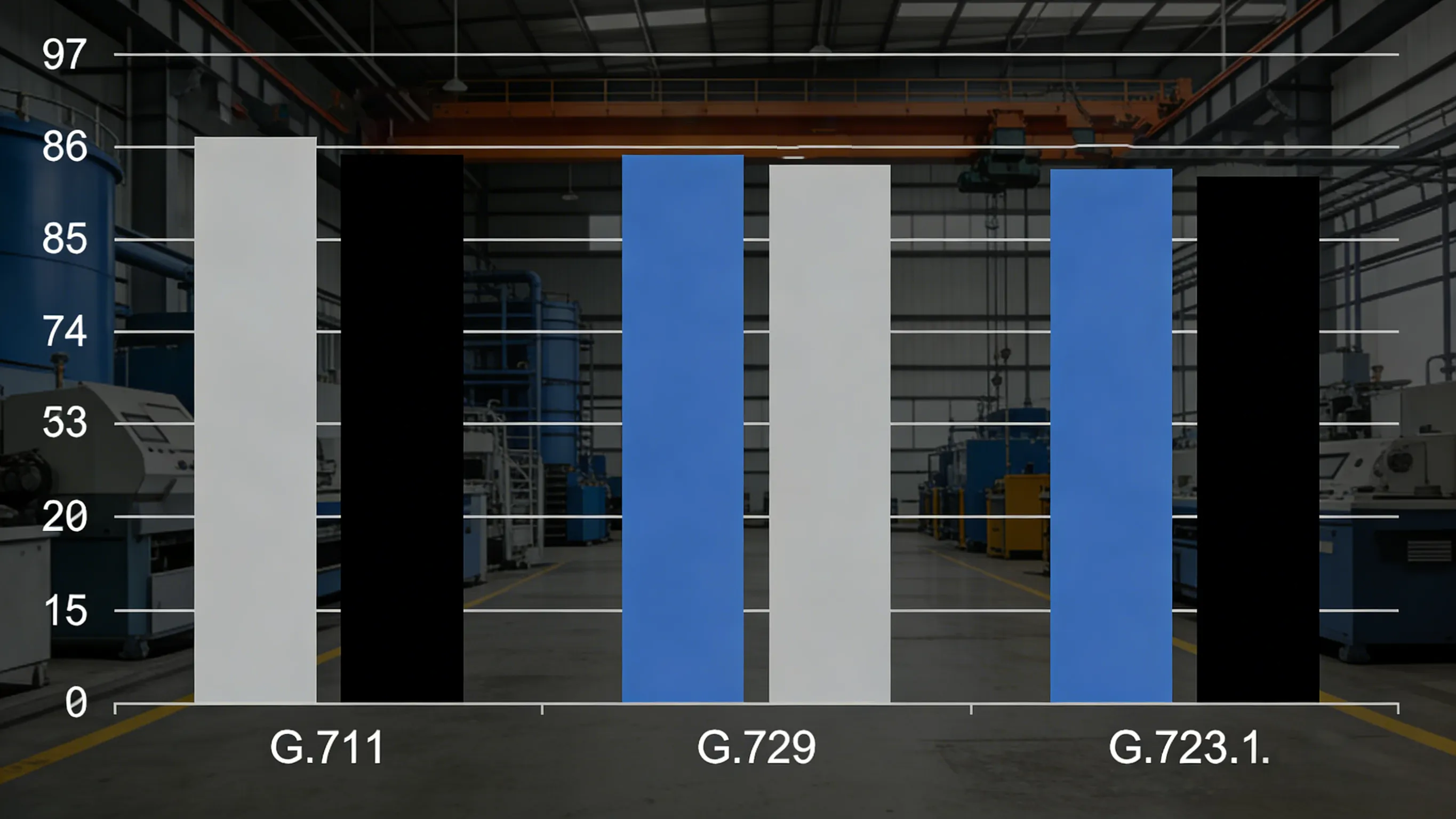
G.711 is a basic voice coding standard formulated by ITU-T, a typical waveform coding algorithm, and also the most basic coding scheme in industrial voice communication. It is divided into A-law and μ-law coding methods, and A-law coding is mostly used in domestic industrial scenarios. The algorithm has a sampling rate of 8 kHz, 16-bit quantization, an original bit rate of 64 kbps, no high-intensity compression capability, and only optimizes the original voice signal through simple logarithmic quantization, belonging to lossless/near-lossless coding.
Bandwidth Efficiency Performance: Extremely high bandwidth occupation, a single call occupies 64 kbps bandwidth without any data compression, and bandwidth utilization is very low. It is only suitable for wired industrial network scenarios with sufficient bandwidth in local area networks; Voice Quality: Extremely high voice fidelity, no distortion, can perfectly restore industrial instructions and detailed call content, and the anti-noise ability adapts to mild industrial noise scenarios; Industrial Adaptability: Extremely low hardware decoding threshold, supported by almost all industrial telephones, delay is less than 1 ms, suitable for control rooms and short-distance in-station call scenarios with extremely high requirements for voice fidelity and no bandwidth pressure, but not suitable for multi-terminal concurrent, narrowband wireless, and long-distance transmission scenarios.
G.729 (Hybrid Coding, Mainstream Scheme with High Bandwidth Efficiency)
G.729 is a Conjugate-Structure Algebraic-Code-Excited Linear Prediction (CS-ACELP) hybrid coding algorithm launched by ITU-T, designed for low-bit-rate voice communication. It is the most widely used compression algorithm in industrial telephones at present, with a standard bit rate of 8 kbps. It also supports extended versions such as G.729A and G.729B to further optimize power consumption and delay.
Bandwidth Efficiency Performance: The compression ratio is as high as 8:1, a single call only occupies 8 kbps bandwidth, bandwidth occupation is reduced by 87.5% compared with G.711, bandwidth utilization is greatly improved, and more than 8 times the call concurrency can be achieved within limited bandwidth, perfectly adapting to narrowband industrial private networks, wireless data transmission, and long-distance transmission scenarios; Voice Quality: Extremely high voice intelligibility, fully meeting the needs of industrial instructions, emergency calls, and daily scheduling. Although the naturalness is slightly lower than G.711, it is more practical in industrial scenarios. Combined with industrial noise suppression technology, it can adapt to moderate noise scenarios; Industrial Adaptability: Moderate hardware computing power requirements, supported by mainstream industrial telephones and industrial voice gateways, delay is about 10 ms, balancing low delay and high compression ratio, making it the preferred algorithm for mines, rail transit, electric power and other scenarios.
G.723.1 (Hybrid Coding, Special Scheme for Extremely Low Bit Rate)
G.723.1 is a dual-rate hybrid coding algorithm that supports two bit rate modes of 5.3 kbps and 6.3 kbps. It adopts Multi-Pulse Maximum Likelihood Quantization (MP-MLQ) and Algebraic Codebook Excited Linear Prediction (ACELP) technology, focusing on extremely low bit rate transmission, designed specifically for industrial scenarios with extremely limited bandwidth.
Bandwidth Efficiency Performance: The maximum compression ratio can reach 12:1. At 5.3 kbps bit rate, the bandwidth occupation is only 1/12 of G.711, and the bandwidth utilization reaches the top level in the industry. It is suitable for extreme bandwidth-constrained scenarios such as satellite communication, narrowband transmission in remote mining areas, and weak wireless networks; Voice Quality: Intelligibility meets basic industrial call requirements, detail fidelity is slightly lower than G.729, delay is slightly higher (about 20 ms), suitable for non-continuous call scenarios such as emergency calls and instruction transmission; Industrial Adaptability: Adapts to low-power, narrowband industrial terminals, dedicated for some explosion-proof and portable industrial telephones, suitable for long-distance industrial communication scenarios with extremely scarce bandwidth resources.
Other Algorithms Adapted to Industrial Scenarios
In addition to the above three mainstream algorithms, some high-end industrial telephones also support algorithms such as AMR-NB and OPUS. AMR-NB is an adaptive multi-rate coding that can automatically adjust the bit rate (4.75–12.2 kbps) according to network bandwidth, adapting to industrial wireless scenarios with large network fluctuations; OPUS coding takes into account both voice and music transmission, with a wide adjustable bit rate range, suitable for industrial multimedia scheduling and high-definition voice intercom scenarios, but has high hardware computing power requirements and a relatively niche application range.
Core Solutions for Bandwidth Efficiency Optimization of Industrial Telephones
Dynamic Algorithm Switching and Adaptive Coding
The network environment in industrial scenarios is complex and changeable, and a single compression algorithm cannot adapt to all scenarios. Adaptive coding switching is the core solution to improve bandwidth efficiency. Industrial voice systems can monitor network bandwidth, packet loss rate, delay and other parameters in real time, and automatically switch to the appropriate compression algorithm: when network bandwidth is sufficient, enable G.711 to ensure voice fidelity; when network bandwidth is limited and multi-terminals are concurrent, automatically switch to G.729 to improve bandwidth utilization; when the network is in a weak or narrowband state, switch to G.723.1 to ensure call connectivity.
This solution requires no manual intervention and can be dynamically adjusted according to network status, avoiding bandwidth waste and ensuring call stability. It is the most commonly used bandwidth optimization method in industrial voice communication systems at present, supporting the linkage implementation of mainstream industrial voice gateways and intelligent industrial telephones.
Silence Suppression and Comfort Noise Generation (VAD+CNG)
During industrial calls, silent and idle segments account for about 40%–60%. Continuous data transmission during these periods without valid voice information will cause great bandwidth waste. Through Voice Activity Detection (VAD) technology, voice signals and silent signals are identified in real time. Voice data transmission is automatically stopped during silent segments, and only a very small amount of Comfort Noise Generation (CNG) instructions are sent. The receiving end generates background noise according to the instructions to avoid a sense of disconnection during calls.
Combined with silence suppression technology and G.729 compression algorithm, the actual bandwidth occupation can be further reduced to 4–6 kbps, and bandwidth utilization is increased by more than 50%. It is especially suitable for industrial scheduling and intermittent instruction call scenarios, without affecting normal voice transmission, while greatly relieving network bandwidth pressure.
Header Compression and Transmission Protocol Optimization
Industrial voice data are mostly transmitted based on IP networks using the RTP/UDP/IP protocol stack. Protocol headers occupy a high proportion of bandwidth, with pure voice data accounting for only 30%–40% of transmitted data packets, and the rest being header redundancy. For industrial scenarios, enable cRTP (Compressed Real-Time Transport Protocol) technology to compactly compress IP, UDP, and RTP headers, reducing the original header of about 40 bytes to 2–4 bytes, greatly reducing transmission overhead.
At the same time, optimize the transmission data packet size to adapt to the industrial network MTU value, avoid data packet fragmentation and retransmission, reduce packet loss and delay, and indirectly improve effective bandwidth utilization. This solution, combined with voice compression algorithms, can achieve dual optimization of bandwidth efficiency, suitable for wireless industrial networks and long-distance IP transmission scenarios.
Multi-terminal Concurrent Bandwidth Allocation Strategy
Industrial scenarios often have dozens or even hundreds of industrial telephones making concurrent calls. Without a reasonable bandwidth allocation mechanism, bandwidth congestion is very likely to occur. A priority-based bandwidth allocation scheme can classify priorities according to call types: emergency calls and alarm calls are the highest priority, occupying stable bandwidth; daily scheduling and internal calls are ordinary priorities, dynamically allocating remaining bandwidth.
Combined with the bandwidth occupation advantage of compression algorithms, for example, a single G.729 call only needs 8 kbps, and 1M bandwidth can support more than 100 concurrent calls. Through reasonable bandwidth allocation and algorithm adaptation, existing network resources can be maximized without additional bandwidth expansion, reducing industrial networking costs.
Selection and Engineering Deployment Suggestions for Industrial Telephone Compression Algorithms
Core Principles of Scenario-based Selection
1. Wired Local Area Network, Control Room Scenarios: Sufficient bandwidth resources, give priority to G.711 algorithm to ensure no voice distortion, adapting to high-precision instruction transmission and high-definition intercom requirements;
2. General Industrial Workshops, Stations, Rail Transit Scenarios: Balance bandwidth efficiency and voice quality, choose G.729 algorithm as the first choice, adapting to multi-concurrency and narrowband private networks, balancing cost and performance;
3. Remote Mining Areas, Oil Fields, Wireless Weak Network Scenarios: Extremely limited bandwidth, choose G.723.1 algorithm to ensure call connectivity and meet basic emergency and instruction transmission;
4. Wireless Industrial Scenarios with Large Network Fluctuations: Choose adaptive multi-rate algorithm (AMR-NB) to automatically adapt to network changes and avoid call interruption.
Hardware and System Adaptation Requirements
Industrial telephone hardware must support decoding chips for corresponding algorithms to ensure low-power and stable operation. For special industrial terminals such as explosion-proof and dust-proof, algorithm compatibility must be confirmed in advance; industrial voice gateways and scheduling systems must support multi-algorithm compatibility, adaptive switching, header compression and other functions to connect the whole-process bandwidth optimization of terminals and transmission links; at the same time, algorithm deployment must take into account delay indicators. The delay of industrial emergency calls is recommended to be controlled within 50 ms to avoid affecting emergency response efficiency.
Testing and Operation & Maintenance Optimization
After algorithm deployment, on-site bandwidth testing, voice quality testing, and concurrent call testing must be carried out to verify bandwidth utilization and call stability; in later operation and maintenance, regularly monitor network bandwidth occupation, packet loss rate, delay and other parameters, adjust algorithms and compression parameters according to scenario changes, and continuously optimize bandwidth efficiency; for old industrial terminals, new compression algorithms can be supported through firmware upgrades, improving bandwidth utilization without replacing hardware and reducing upgrade costs.
Development Trend of Industrial Voice Compression Algorithms and Bandwidth Efficiency
With the popularization of the Industrial Internet, 5G industrial private networks, and AI technology, voice compression algorithms for industrial telephones are also continuously iterating. The future will develop towards AI intelligent coding, lower bit rate, higher quality, and adaptive optimization. Intelligent voice coding algorithms based on neural networks can accurately eliminate redundant data through AI models, achieving voice quality comparable to G.729 at an extremely low bit rate of 2–4 kbps, further breaking through bandwidth limitations; at the same time, combined with industrial IoT big data, realize global bandwidth dynamic scheduling and intelligent algorithm optimization, creating a more efficient and stable industrial voice communication system.
For the industrial communication field, voice compression algorithms have always been the core of bandwidth efficiency optimization. Choosing a scenario-adapted algorithm solution can not only improve call quality and system stability, but also effectively reduce networking, expansion and operation costs, adapting to the communication needs of industrial digital transformation.

 English
 Deutsch
 한국어
한국어 Русский
 Français
 日本語
日本語 لالعربية
 हिन्दी
 Español
 Português
 繁体中文
繁体中文 简体中文
简体中文